1
/
of
1
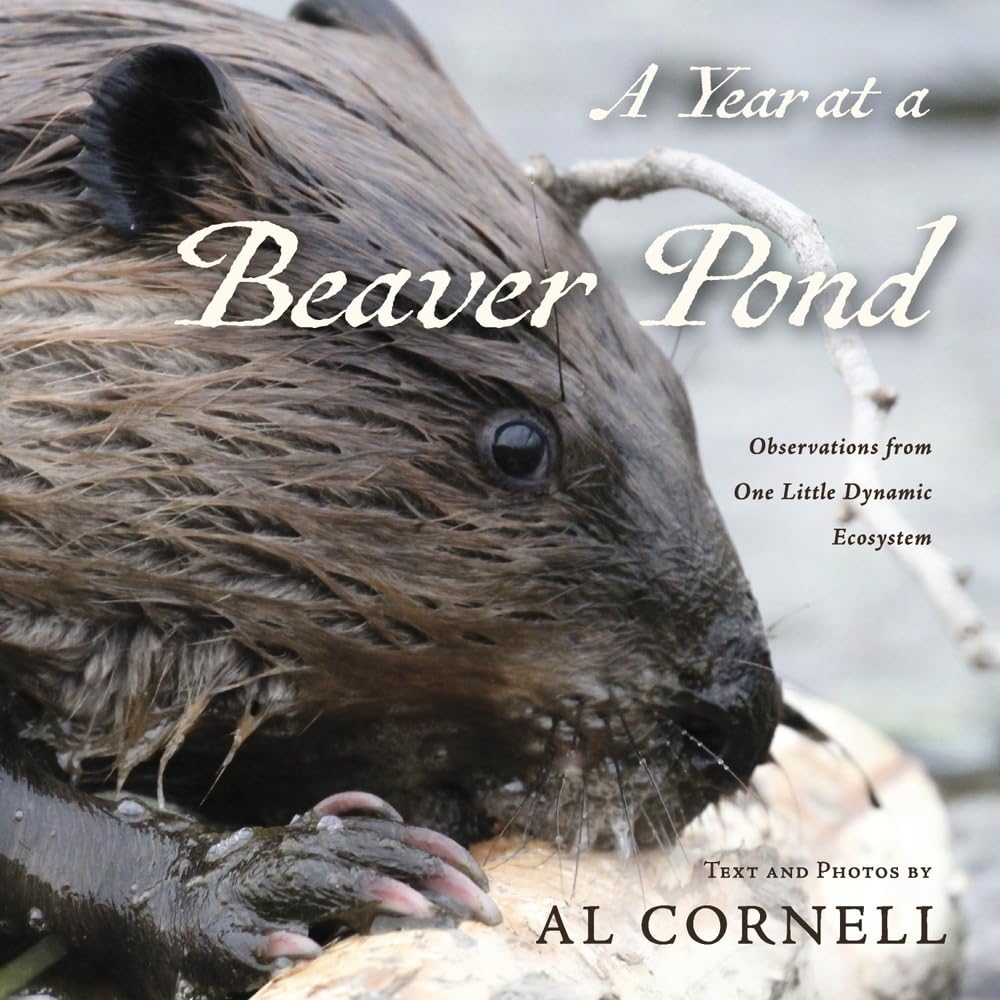
Year at a Beaver Pond: Observations from One Little Dynamic Ecosystem
Out of stock
Regular price
$36.95 USD
Regular price
$49.00 USD
Sale price
$36.95 USD
Unit price
/
per
Shipping calculated at checkout.
No reviews
Cover Type:Hardcover
EAN: 9798350931129
Pages: 150
Couldn't load pickup availability
** Product Overview **
A beaver pond, that had gone undetected because of the tall wetland vegetation, became visible after a late winter snowfall flattened that vegetation. It had been built the previous summer and fall. Sally and I were driving down the road a mile from our house when we observed it and watched a bald eagle go into a sudden stoop toward a wood duck. The frightened duck shot down over the dam and escaped downstream. A few days later, I entered a small blind on the edge of the pond 45 minutes before sunrise. That quickly grew from a session to an obsession and then to "A Year at a Beaver Pond." Dozens of of field notes and thousands of photos provided the foundation for a story. With this book, you too can sit by the dam and envision what transpires at that tenth of an acre pond.
Though small, that mini ecosystem adds dramatically to the adjacent habitat. In the sediment beneath the pond, a myriad of insect larvae feed on deposited organic matter. Most of them, at some stage in their metamorphosis, become food for fish, birds, raccoons, or larger insects. In turn, fish become food for larger fish, birds, and mammals. This book is the product of observing insects, toads, and trout along with 61 species of birds and nine species of mammals that were drawn to the footprint of the pond. By the footprint, I mean the pond, the dam, and the vegetation growing at the immediate edge of the pond.
Otter were elusive until one finally decided to frolic in the magical early morning light. A beaver even used a rock for a dam repair. Warblers, swallows, flycatchers, and waxwings fed on insects from tiny moth flies to long-legged craneflies. The trout feeding activity peaked when dozens were jumping during the midge hatch. A raccoon brought her young ones to sift through the sediments for edible morsels. Sandpipers and snipe probed the shallow water and the mudflats for earthworms and larvae. When mudflats were exposed, mink, a cottontail, and many birds used them for travel and feeding. The little remnant willow near the blind was searched by small birds, used as a landing spot by those feeding on flighted insects, and used by kingfishers and herons that fed on trout. Jewelweed, blooming on the dam, enticed hummingbirds and bumblebees.
The ecological wonder of beaver ponds helps establish a sense of the value of beavers. By gradually overcoming the bias that they are just a nuisance, perhaps at some point, we will be able to tolerate half of the population that inhabited this continent before the massive fur harvest decimated them.
der-toggle="{"allowLinkDefault":true, "expand_prompt":"Read more", "collapse_prompt":"Read less"}">Read more
Though small, that mini ecosystem adds dramatically to the adjacent habitat. In the sediment beneath the pond, a myriad of insect larvae feed on deposited organic matter. Most of them, at some stage in their metamorphosis, become food for fish, birds, raccoons, or larger insects. In turn, fish become food for larger fish, birds, and mammals. This book is the product of observing insects, toads, and trout along with 61 species of birds and nine species of mammals that were drawn to the footprint of the pond. By the footprint, I mean the pond, the dam, and the vegetation growing at the immediate edge of the pond.
Otter were elusive until one finally decided to frolic in the magical early morning light. A beaver even used a rock for a dam repair. Warblers, swallows, flycatchers, and waxwings fed on insects from tiny moth flies to long-legged craneflies. The trout feeding activity peaked when dozens were jumping during the midge hatch. A raccoon brought her young ones to sift through the sediments for edible morsels. Sandpipers and snipe probed the shallow water and the mudflats for earthworms and larvae. When mudflats were exposed, mink, a cottontail, and many birds used them for travel and feeding. The little remnant willow near the blind was searched by small birds, used as a landing spot by those feeding on flighted insects, and used by kingfishers and herons that fed on trout. Jewelweed, blooming on the dam, enticed hummingbirds and bumblebees.
The ecological wonder of beaver ponds helps establish a sense of the value of beavers. By gradually overcoming the bias that they are just a nuisance, perhaps at some point, we will be able to tolerate half of the population that inhabited this continent before the massive fur harvest decimated them.
Share

Our Best sellers
-
A Parade of Horribles (Dungeon Crawler Carl)
Vendor:Ace BooksRegular price $21.95 USDRegular priceUnit price / perSale price $21.95 USD -
SaleYour Valentine
Vendor:Sophia Institute PressRegular price $11.95 USDRegular priceUnit price / per$17.95 USDSale price $11.95 USDSale -
Why Did Jesus Have to Die?: The Meaning of the Crucifixion (Why Did Jesus Have to Die?)
Vendor:Abingdon PressRegular price $16.95 USDRegular priceUnit price / per$21.99 USDSale price $16.95 USDSale -
The Atomic Habits Workbook: Official Companion to the #1 Worldwide Bestseller
Vendor:Avery Publishing GroupRegular price $19.95 USDRegular priceUnit price / per$26.00 USDSale price $19.95 USDSale -
Stop, in the Name of God: Why Honoring the Sabbath Will Transform Your Life
Vendor:Winning Team PublishingRegular price $24.95 USDRegular priceUnit price / per$29.99 USDSale price $24.95 USDSale