1
/
of
1
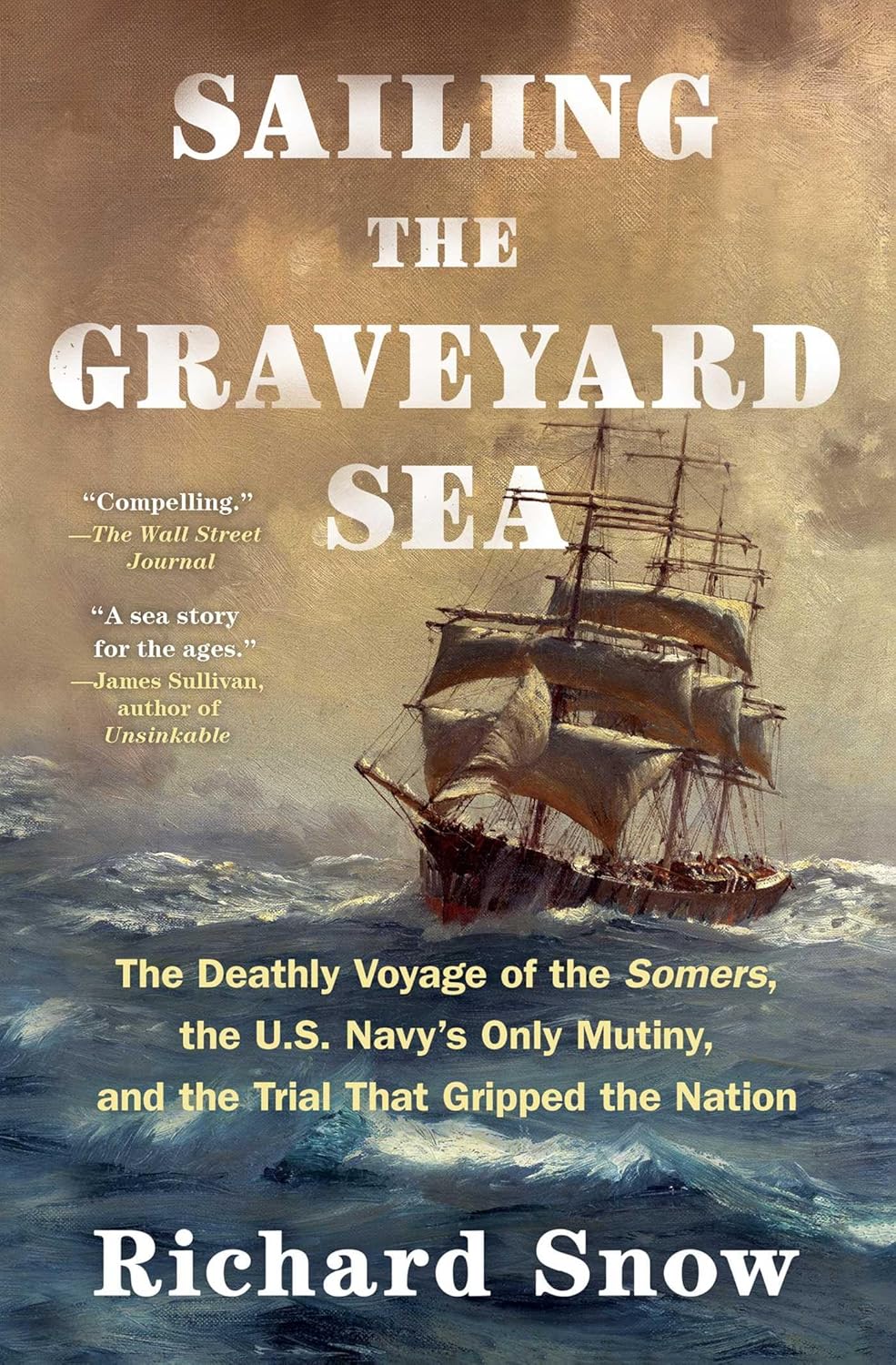
Sailing the Graveyard Sea: The Deathly Voyage of the Somers, the U.S. Navy's Only Mutiny, and the Trial That Gripped the Nation
142 in stock
Regular price
$14.95 USD
Regular price
$19.00 USD
Sale price
$14.95 USD
Unit price
/
per
Shipping calculated at checkout.
No reviews
Cover Type:Paperback
ISBN: 1982185457
EAN: 9781982185459
Couldn't load pickup availability
** Product Overview **
A “compelling” (The Wall Street Journal) account of the only mutiny in the history of the United States Navy—a little-known but once notorious event that cost three young men their lives—part murder mystery, part courtroom drama, and as propulsive and dramatic as the bestselling novels of Patrick O’Brian.
On December 16, 1842, the US brig-of-war Somers dropped anchor in the New York Harbor at the end of a voyage intended to teach a group of adolescents the rudiments of naval life. But this routine exercise ended in catastrophe. Commander Alexander Slidell Mackenzie came ashore claiming he had prevented a mutiny that would have left him and his officers dead. Some of the thwarted mutineers were being held under guard, but three had already been hanged at sea: Boatswain’s Mate Samuel Cromwell, Seaman Elisha Small, and Acting Midshipman Philip Spencer, whose father was the secretary of war, John Spencer.
Eighteen-year-old Philip Spencer, according to his commander, had been the ringleader who encouraged the crew to seize the ship and become pirates so that they might rape and pillage their way through the northern coast of South America and the Caribbean. While the young man might have been fascinated by stories of pirates, it soon became clear the order that condemned the three men had no legal basis. And, worse, it appeared possible that no mutiny had actually occurred, and that the ship might instead have been seized by a creeping hysteria that ended in the sacrifice of three innocents.
Months of accusations and counteraccusations were followed by a highly public court-martial that put Mackenzie on trial for his life, and a storm of anti-Navy sentiment drew the attention of such leading writers of the day as Herman Melville and James Fenimore Cooper. But some good did come out of it: public disgust with Mackenzie’s hapless “training” gave birth to Annapolis, the distinguished naval academ that within a century would produce the mightiest navy the world had ever known.
Vividly told and filled with tense shown directly in court-martial transcripts, Richard Snow’s masterly account of this all-but-forgotten episode is “a hell of a yarn” (Kirkus Reviews) and naval history at its finest.
On December 16, 1842, the US brig-of-war Somers dropped anchor in the New York Harbor at the end of a voyage intended to teach a group of adolescents the rudiments of naval life. But this routine exercise ended in catastrophe. Commander Alexander Slidell Mackenzie came ashore claiming he had prevented a mutiny that would have left him and his officers dead. Some of the thwarted mutineers were being held under guard, but three had already been hanged at sea: Boatswain’s Mate Samuel Cromwell, Seaman Elisha Small, and Acting Midshipman Philip Spencer, whose father was the secretary of war, John Spencer.
Eighteen-year-old Philip Spencer, according to his commander, had been the ringleader who encouraged the crew to seize the ship and become pirates so that they might rape and pillage their way through the northern coast of South America and the Caribbean. While the young man might have been fascinated by stories of pirates, it soon became clear the order that condemned the three men had no legal basis. And, worse, it appeared possible that no mutiny had actually occurred, and that the ship might instead have been seized by a creeping hysteria that ended in the sacrifice of three innocents.
Months of accusations and counteraccusations were followed by a highly public court-martial that put Mackenzie on trial for his life, and a storm of anti-Navy sentiment drew the attention of such leading writers of the day as Herman Melville and James Fenimore Cooper. But some good did come out of it: public disgust with Mackenzie’s hapless “training” gave birth to Annapolis, the distinguished naval academ that within a century would produce the mightiest navy the world had ever known.
Vividly told and filled with tense shown directly in court-martial transcripts, Richard Snow’s masterly account of this all-but-forgotten episode is “a hell of a yarn” (Kirkus Reviews) and naval history at its finest.
}">Read more
Share

Our Best sellers
-
A Parade of Horribles (Dungeon Crawler Carl)
Vendor:Ace BooksRegular price $21.95 USDRegular priceUnit price / perSale price $21.95 USD -
SaleYour Valentine
Vendor:Sophia Institute PressRegular price $11.95 USDRegular priceUnit price / per$17.95 USDSale price $11.95 USDSale -
Why Did Jesus Have to Die?: The Meaning of the Crucifixion (Why Did Jesus Have to Die?)
Vendor:Abingdon PressRegular price $16.95 USDRegular priceUnit price / per$21.99 USDSale price $16.95 USDSale -
The Atomic Habits Workbook: Official Companion to the #1 Worldwide Bestseller
Vendor:Avery Publishing GroupRegular price $19.95 USDRegular priceUnit price / per$26.00 USDSale price $19.95 USDSale -
Stop, in the Name of God: Why Honoring the Sabbath Will Transform Your Life
Vendor:Winning Team PublishingRegular price $24.95 USDRegular priceUnit price / per$29.99 USDSale price $24.95 USDSale